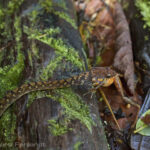
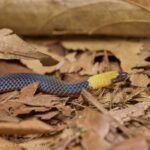
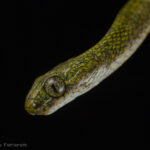
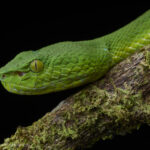
Common mock viper, Psammodynastes pulverulentus (F. Boie, 1827) of Sarawak / Borneo around 1100m ASL.
Psammodynastes pulverulentus (Boie, 1827) is a small snake species found in Southeast Asia, including Borneo (Kalimantan, Sabah and Sarawak). It’s often found in leaf litter or in the lower vegetation layer of the forest; for this region, an altitude range of 0–1500 m is also given. Behavioural characteristics include diurnal activity and a pronounced defensive attitude: In field descriptions from Borneo, the species is described as relatively aggressive and having significantly enlarged front teeth; at the same time, the venom is classified as only mildly effective and is generally not considered dangerous to humans. Small lizards and occasionally frogs are mentioned as food sources for Borneo; in general, lizards (including skinks) and frogs are described as prey. Reproduction is described as ovoviviparous, meaning that the young are born alive. Etymologically, the genus name Psammodynastes is derived from the Greek psammos (‘sand’) and dynastes (‘ruler’); the species epithet pulverulentus comes from Latin and means ‘dusty’ or ‘covered in dust’, referring to the colouring (often described as muted/dusty).


related posts: