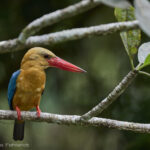
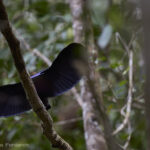
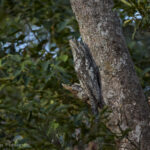
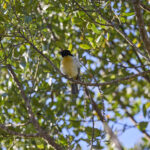
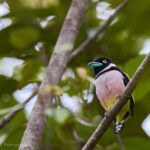
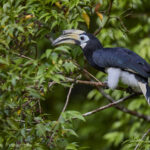
Brown-headed paradise kingfisher – Tanysiptera danae Sharpe, 1880 – of Central Province / Papua new guinea 800m ASL.
The Brown-headed Paradise-Kingfisher or Russet Paradise-Kingfisher, is a monotypic species of kingfisher in the family Alcedinidae. It is endemic to southeastern Papua New Guinea, where it occurs in the lowland and foothill forests of the Southeastern Peninsula, including the Owen Stanley Range and the region around Milne Bay, generally below approximately 1,000 m above sea level. The species is characterised by its brown head and upper back, reddish-orange underparts, bright blue wing coverts, red bill and greatly elongated central tail feathers. The genus Tanysiptera derives from the Classical Greek tanusipteros, meaning “long-feathered”, in reference to the extended tail streamers typical of the genus. The specific epithet danae is generally interpreted as a reference to Danaë, the daughter of King Acrisius in Greek mythology, although Richard Bowdler Sharpe did not provide an explicit explanation when he described the species in 1880. Tanysiptera danae is a sedentary, diurnal forest bird that hunts mainly by watching the ground from a perch and descending rapidly to seize prey among the leaf litter. Its documented diet consists predominantly of terrestrial invertebrates, especially insects; unlike many familiar kingfishers, it is not primarily associated with catching fish.

related posts: