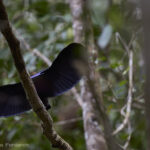
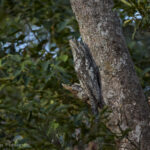
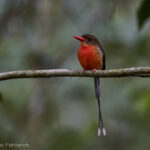
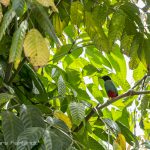
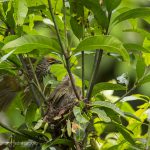
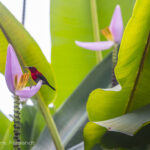
King-of-Saxony Bird-of-Paradise – Pteridophora alberti Meyer, 1894 of Enga Province / Papua new guinea 2600m ASL.
The King-of-Saxony Bird-of-Paradise (Pteridophora alberti) is the only species in its genus and is endemic to the montane forests of New Guinea, occurring in both Indonesian New Guinea and Papua New Guinea, mainly at elevations of approximately 1,400–2,850 metres. Adult males are about 22 cm long, excluding two independently movable ornamental head plumes that can reach approximately 50 cm. The genus name Pteridophora derives from Greek words meaning “fern-bearing” and refers to these unusual, fern-like plumes. The species was described by Adolf Bernhard Meyer in 1894 and named in honour of the reigning Saxon monarch, King Friedrich August Albert Anton Ferdinand Joseph Karl Maria Baptist Nepomuk Wilhelm Xaver Georg Fidelis, commonly known as King Albert of Saxony. Both the specific epithet alberti and the English name commemorate him. Males are polygynous and attract females through distinctive calls and elaborate courtship displays involving controlled movements of the head plumes and body feathers. The species feeds mainly on fruit, supplemented by insects and other arthropods.


related posts: