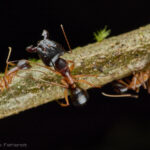
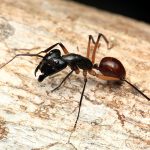
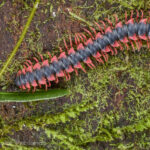
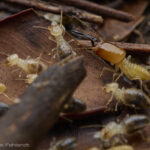
Swarm of giant stinging ants, Leptogenys chalybaea (Emery, 1887) with a millipede prey (Acanthodesmus sp.) – Sarawak / Borneo – around 1050m ASL
Leptogenys chalybaea is an ant species in the subfamily Ponerinae (Formicidae). It was first described in 1887; the basionym is Lobopelta chalybaea, which is currently treated as Leptogenys chalybaea. In Borneo, L. chalybaea ranks among the largest representatives of the genus. Ecologically, the species is characterized by pronounced trophic specialization: workers hunt almost exclusively diplopods (millipedes), thereby occupying a narrowly defined niche within the ecosystem’s food web. In contrast to many other Leptogenys species, L. chalybaea is often observed transporting intact preys to its shelter rather than dismembering them prior to retrieval. Owing to its large body size and a distinctive bluish metallic sheen, the species is relatively easy to recognize in the field. Its sting is widely reported to be exceptionally painful; consequently, the ant is considered and avoided as potentially dangerous by local indigenous communities in Borneo, including nomadic groups such as the Penan and Punan.


related posts: