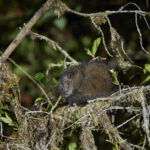
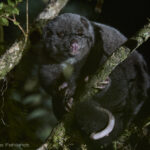
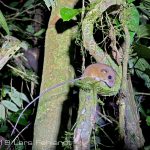
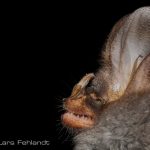
Striped possum – Dactylopsila trivirgata J. E. Gray, 1858 (Subspecies: Dactylopsila trivirgata melampus) – of Central Province / Papua New Guinea – around 700m ASL.
Dactylopsila trivirgata, commonly known as the Striped Possum, is an arboreal marsupial of the family Petauridae. It is widely distributed through the lowland and lower-montane forests of New Guinea, including Papua New Guinea, and also occurs on Yapen, Waigeo, the Aru Islands and in northeastern Queensland. The species was originally described from material collected by Alfred Russel Wallace on the Aru Islands. Its pale greyish or whitish coat is marked by three conspicuous dark longitudinal stripes, while the face bears a characteristic contrasting pattern. The specific epithet trivirgata means “three-striped” in Latin and refers directly to this pelage pattern. The species is nocturnal and predominantly arboreal, spending the day in leaf-lined tree hollows or among dense epiphytes. It often forages noisily on living trees, dead trunks and rotting wood. The Striped Possum is primarily insectivorous and feeds especially on ants, termites and wood-boring beetle and moth larvae. It locates concealed prey by rapidly tapping the wood with its forefeet, opens the bark with its powerful incisors and extracts larvae using its slender, elongated fourth finger. Quantitative dietary research, conducted principally in northern Queensland, also recorded smaller quantities of flowers, pollen, plant exudates and fruit.


related posts: