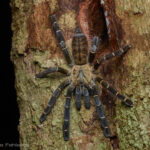
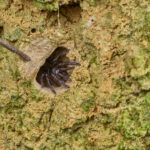
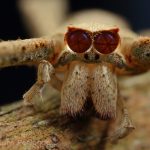
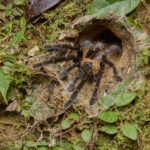
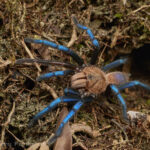
Cyriopagopus doriae (Thorell, 1890) of central Sarawak, Borneo – around 400m ASL.
Cyriopagopus doriae is a tarantula (family Theraphosidae) from Borneo. The species was originally described as Selenocosmia doriae, later placed by Eugène Simon in the genus Haplopelma, which he established, and is currently listed in the World Spider Catalog as Cyriopagopus doriae. Its known distribution area includes Borneo (with records from Sabah, Sarawak and Kalimantan); its possible occurrence in Brunei is also being discussed. Field observations describe the species as burrowing: it builds silk-lined tubes that often begin on slopes or steep clay or road embankments. One described tunnel system initially ran horizontally for about 20–30 cm and then led downwards; measured tunnel depths are reported to be up to 122 cm, with an enlarged chamber at the end. The entrance can be funnel-shaped and structured with leaves or detritus; during the day, the entrance is often closed with cobwebs, while at night animals have been observed at the tunnel exit, where they react as ambush hunters to passing prey. Large spider wasps (Pompilidae) have been observed in the vicinity of burrows as potential predators, which paralyse tarantulas with a sting and use them as food for their larvae. Measurements from natural burrows also show a significantly more stable temperature inside the burrow compared to the outside air. Regarding the etymology, the World Spider Catalog notes that the word ending ‘-pagopus’ is derived from ancient Greek and means ‘frost foot/ice foot’; the species name doriae refers to ‘Doria’ and is to be understood as a dedication.


related posts: