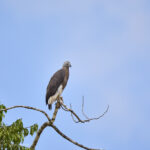
Oriental darter, Anhinga melanogaster Pennant, 1769 of Borneo.
Anhinga melanogaster is a large water bird of the Anhingidae family and was scientifically described by Thomas Pennant in 1769. On Borneo, the species is listed as a resident bird on inland waters; it is reported to still be common on rivers on the island, while it appears to have largely disappeared from most coastal areas. It feeds by diving: when swimming, its body remains largely submerged, with often only its long, slender neck visible. Prey is caught or speared underwater with its straight, dagger-like beak, then aligned at the surface and typically swallowed head first. As with cormorants, the feathers are easily wetted and can become soaked; therefore, the species is often observed sitting with its wings spread out to dry and uses exposed perches and communal roosts in open trees. Their diet consists mainly of fish; amphibians, reptiles and various aquatic invertebrates (including insects, crustaceans and molluscs) are also mentioned. Colonial breeding and nest building from twigs (typically in trees above or near water) have been described. Etymologically, the genus name Anhinga comes from a word in the Brazilian Tupi language; in reference works, it is rendered as ‘devil bird’ or ‘evil spirit of the woods’, among other things. The species epithet melanogaster is formed from the ancient Greek melas (‘black’) and gaster (“belly”) and means ‘black belly’.

related posts: