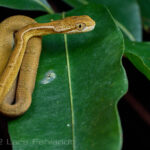
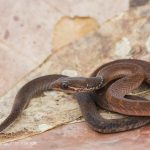
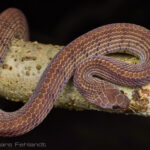
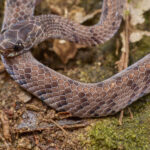
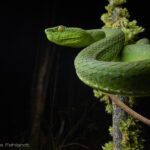
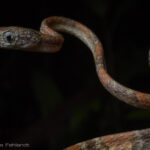
Common mock viper, Psammodynastes pulverulentus (F. Boie, 1827) of south Sarawak / Borneo around 1000m ASL.
Psammodynastes pulverulentus (Boie, 1827) is a rear-fanged snake from the superfamily Elapoidea, widespread in South and Southeast Asia; based on phylogenomic data, the genus Psammodynastes has been listed in its own family, Psammodynastidae, since 2024.
The genus name Psammodynastes is derived from the ancient Greek psammos (‘sand’) and dynastēs (“ruler”); the species epithet pulverulentus comes from Latin and means ‘dusty’.
P. pulverulentus is distinctly diurnal, with frogs and lizards (especially skinks) documented as its main prey. According to older literature, the venom acts quickly on small amphibians/reptiles, but is not considered particularly dangerous to humans.
Why ‘mock viper’? The species is considered to be a viper mimic: it resembles vipers in appearance and in its defensive behaviour and has therefore long been referred to as a ‘mock viper’; this protective mimicry is also explicitly described in more recent accounts as an imitation of highly venomous vipers to ward off enemies.


related posts: