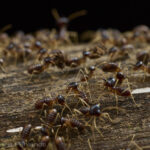
Termites of the Macrotermes genus – central Sarawak / Borneo around 500m ASL
Macrotermes is a genus of so-called fungus-growing termites (Macrotermitinae). These animals live in large colonies with a strict division of labor, consisting of a queen and king as well as worker and soldier castes. Many species build conspicuous mounds, which not only provide protection but also stabilize the climate inside the nest: Inside, the temperature and humidity must remain as constant as possible for the brood and fungus culture, while at the same time allowing sufficient air exchange.
Macrotermes are not simply fed “by wood,” but primarily through a sophisticated interplay of gathering and fungus cultivation. Workers mainly carry in dead plant material such as grass and leaves, chop it up, and process it into fecal pellets. This produces the “fungus comb” on which the cultivated edible fungus of the genus Termitomyces grows. The fungus further breaks down plant components that are difficult to digest; the termites then eat mainly fungus-rich structures and older, already heavily “pre-digested” fungus combs. In this way, coarse plant waste is turned into more nutrient-rich food – an important reason why Macrotermes are among the key decomposers and “ecosystem engineers” in many tropical landscapes.
The name Macrotermes means “large termite”: macro- (‘large’) combined with Termes (a historical termite name from which “termite” is also derived).


related posts: